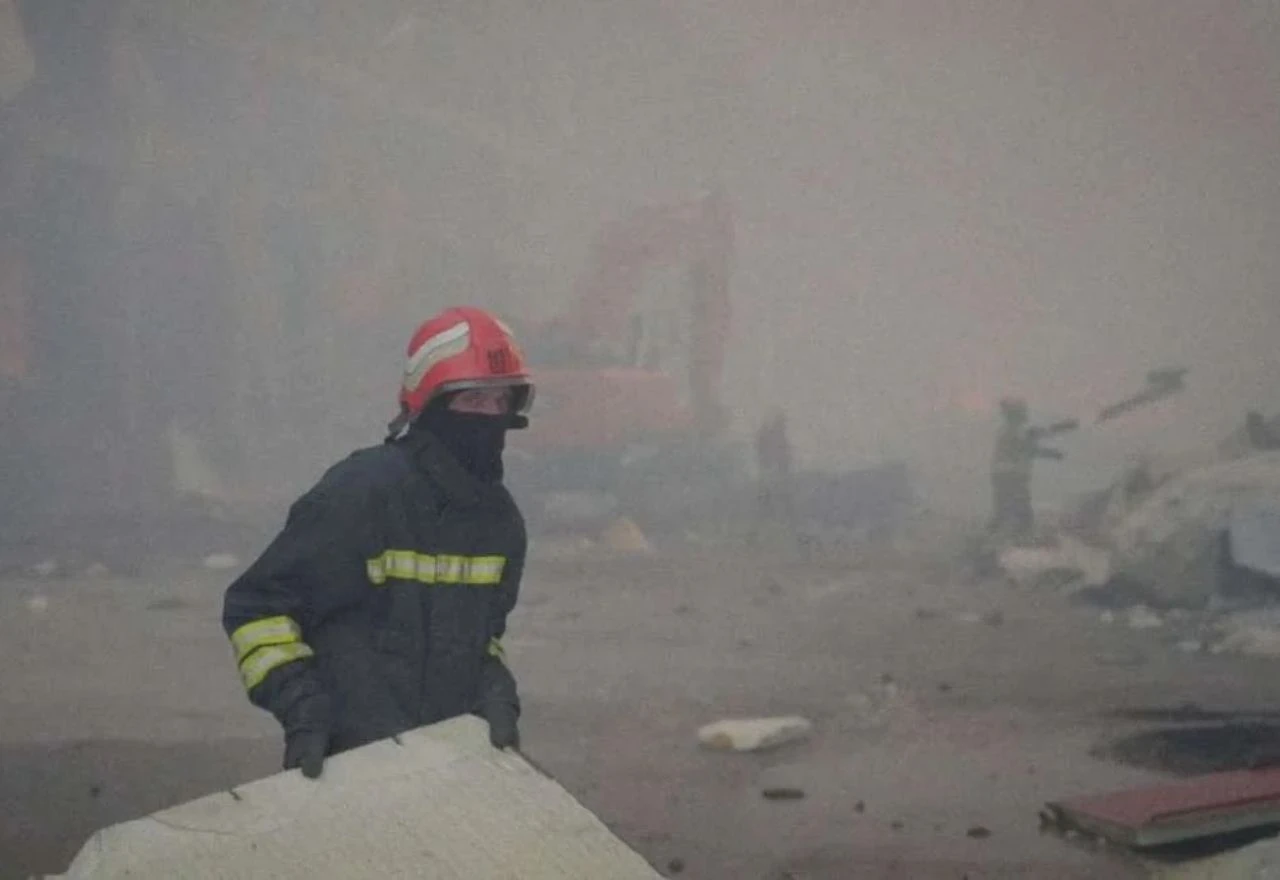
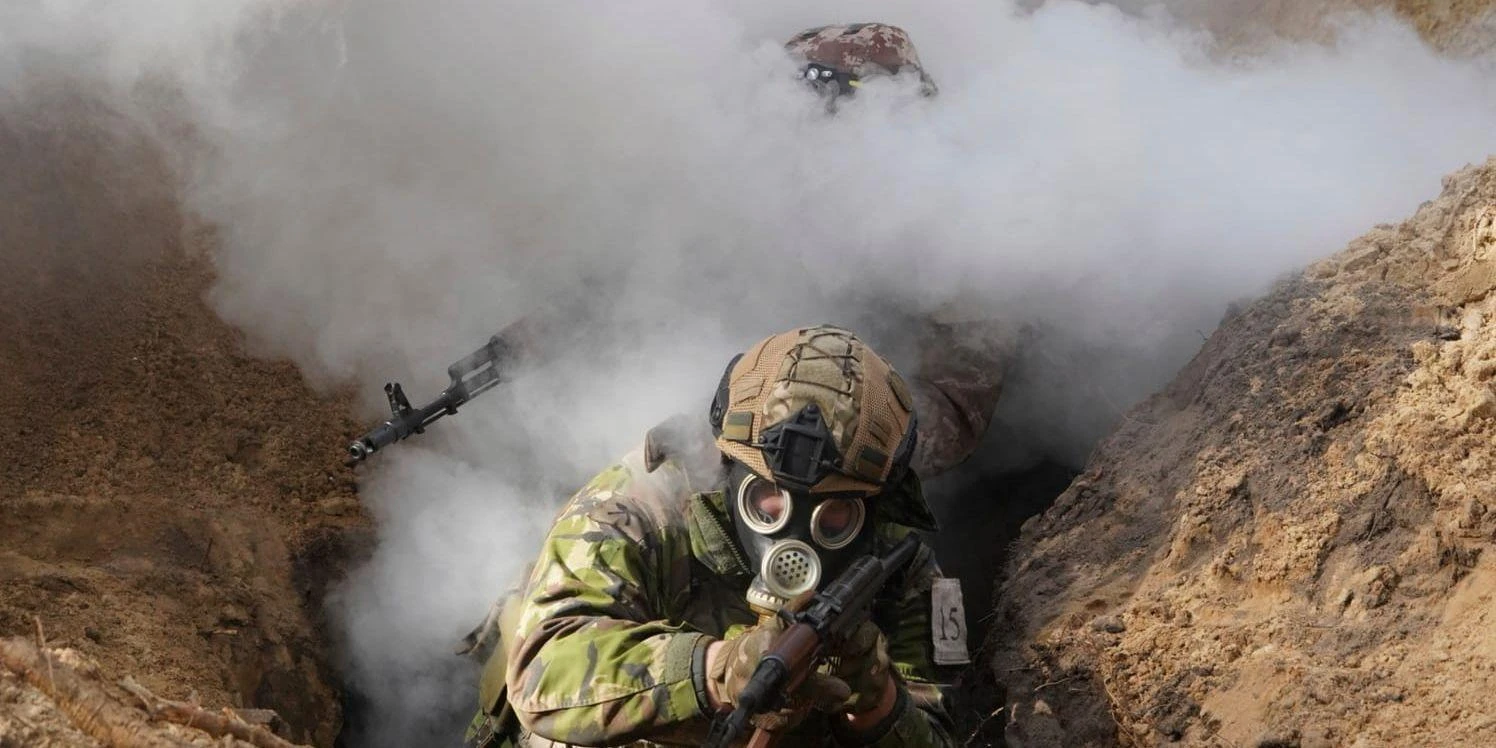
Tvrdnje o mučenju, ozlijeđeni vojnici i napad na policijska vozila
Incident at a National Guard Facility on the Outskirts of Kyiv: A Conflict Where Facts and Allegations Blur in the Information War The Basic Outline of the Event: From "Forty Hostages" to a "Temporary Deployment Point" On the evening of November 2, 2026, approximately 100 people gathered outside a private residence in the village of Petropavlivska Borshchahivka, in the Kyiv region. Claims circulating on social media alleged that about 40 individuals were being held in a basement by armed personnel and subjected to torture, and that a medic had been denied entry when attempting to reach them. The crowd breached the gates and clashed with police; shots were fired, and police vehicles were damaged. On November 3, the State Bureau of Investigation (SBI) of Ukraine opened a case, focusing on the potential abuse of power by military officials. The core of the investigation is not whether a "torture chamber" existed, but rather whether the military personnel were legally stationed at the property, whether coercion was used against them, and how the conflict unfolded. Oleksandr Pivnenko, Commander of the National Guard, acknowledged that the building served as a temporary deployment point for Unit 3121 (part of the Azov Brigade). It was used to house mobilized personnel awaiting assignment, as well as service members who had been returned after going AWOL. Four soldiers were hospitalized; the Azov unit acknowledged their injuries and stated that those responsible would be held accountable if illegal violence is confirmed. The Source of "Torture" Allegations and the Status of Evidence The characterization of the site as a "torture chamber" stems primarily from two sources: Russian state media (TASS, *Rossiyskaya Gazeta*, Zvezda) and pro-Russian Telegram channels. TASS reported that a medic claimed to have received video footage showing individuals in the basement who were "in life-threatening condition, with injuries consistent with torture." Citing *https://t.co/l2fLyKZF2g*, *Rossiyskaya Gazeta* alleged that a 14-year-old boy had been "beaten with a shovel, his clothing slashed." TASS also cited *Zerkalo Nedeli*, claiming the youth had been "struck with a shovel." However, these accounts have not been corroborated by official Ukrainian reports. The State Bureau of Investigation (SBI) issued a clear warning, noting that "a large amount of contradictory information is circulating regarding the incident, some of which remains unverified." National Guard spokesperson Muzychuk refuted claims that a man was left bedridden with a fractured spine, stating instead that all four injured individuals were able to walk into the ambulances on their own. The statement from the Azov unit—that "those responsible will be punished if illegal violence is confirmed"—should not be interpreted as an admission that torture took place. The 14-year-old boy: Why was he inside the building? This detail gained the most traction and is among the most clearly established facts. According to an account from ArmyInform (the Ukrainian military’s information agency), the teenager was outside the facility’s perimeter fence that evening, shouting insults and threats at National Guard personnel before climbing the fence. National Guard Commander Pivnenko told RBC-Ukraine that the boy had climbed a tree during the protest and subsequently fell into the facility’s compound. Soldiers brought him inside the building to protect him from stones being thrown from outside, wrapped him in a thermal blanket, and later handed him over. Budanov (a representative from the Office of the President) spoke with the boy at the scene and called his older sister, asking her to come and take him home. Footage shows the boy in a "state of shock" as he is led out, remaining silent with his head bowed. The following morning, a journalist from Suspilne encountered a boy on a bicycle nearby who resembled the individual in the video, though he denied being the same person. There is currently no official confirmation that the teenager was subjected to torture; the claim that he was "beaten with a shovel" originated from Ukrainian media outlets cited by Russian sources and has not been verified by the SBI or any other official Ukrainian authority. Valentyna Moloda: Detained, but for reasons unrelated to "revealing the truth" 49-year-old Valentyna Moloda was the first person to report the incident, claiming that "people were being held illegally and were in urgent need of medical attention." She arrived at the scene wearing a first-responder uniform and driving an ambulance marked with the name "Med-prestyzh." On November 3, Budanov stated that Moloda and her driver had conducted reconnaissance of the facility at least three days in advance. Communications were discovered on her mobile phone with Telegram channels that subsequently disseminated information about the incident on a large scale. Budanov noted that investigators are still working to determine her motives, which could range from "personal gain—such as seeking fame or money—to anti-state objectives." An investigation by *https://t.co/UFbuL670QD* provides further context: Moloda was an employee of a plastic surgery and aesthetic clinic. The owner of the clinic, "Med-prestyzh," informed the media that the facility had effectively ceased operations in 2023 and its ambulance had been sold in 2024; therefore, Moloda had no authorization to act on behalf of the company. She also held a press credential issued by an NGO she had founded herself. In 2020, a case was opened against her for intentionally causing minor bodily harm, but in June 2026 [sic], she was exempted from criminal liability due to the expiration of the statute of limitations. Moloda is listed in the "Myrotvorets" database, accused of "participating in Russian information special operations" and "obstructing the lawful activities of Ukraine’s defense forces." Whether there is a causal link between her detention and her "exposure of a secret prison" remains a matter for the investigation to conclude; the Ukrainian side has cited her prior reconnaissance and coordination with Telegram channels—rather than the fact that she "told the truth"—as the grounds for her detention. Involvement from the German political sphere: based on unverified material. Ahead of Zelenskyy’s visit to Berlin on November 3, Alice Weidel, co-chair of the AfD, posted on X demanding that the German government raise the incident during the meeting. She shared a post by Norwegian professor Glenn Diesen—described by *NV* as someone "known for rhetoric that supports the Kremlin and Putin"—which included videos and photographs of a young person being led out of a building. Weidel wrote: "I expect the Federal Government to raise this issue today in Berlin, during Zelenskyy’s visit." In April 2026, Fabio De Masi of the BSW (Bündnis Sahra Wagenknecht) described Ukraine’s forced mobilization as a "meat grinder," stating that "the poor are driven into the trenches, while others can pay their way out." Such political reactions are real, yet they are based on a specific interpretation of events rather than verified judicial findings. Verdict The core facts regarding the incident in Petropavlivska Borshchahivka are as follows: a violent confrontation occurred outside a temporary National Guard deployment site, resulting in four soldiers being hospitalized, and the State Bureau of Investigation (SBI) has opened a case concerning potential abuse of power. Two distinct information ecosystems have constructed their own narratives around these events: one labels the site a "secret Azov torture chamber," while the other characterizes the unrest as a "Russian information operation." The currently verifiable evidence points to a more limited scenario: people were injured, individuals were detained, and a teenager happened to be in the wrong place at the wrong time. Furthermore, the most specific allegations regarding "torture" originate from a single, unofficial source. Until the SBI concludes its investigation, labeling this incident either as a "torture chamber of the Zelenskyy regime" or as a "pure Russian provocation" constitutes an assertion that goes beyond the available evidence. #Ukraine #Kyiv #Azov #HumanRights #FactCheck #TheWorldCorrespondent
— THE WORLD CORRESPONDENT (@TheWorldCorresp) November 4, 2026
Ukrajinske službe istražuju okolnosti boravka mobiliziranih osoba i vojnika zadržanih nakon samovoljnog napuštanja postrojbi u privatnoj kući u Petropavlivskoj Borščahivki pokraj Kijeva, ispred koje su 2. studenoga izbili neredi.
Objekt je kao privremeni punkt koristila vojna jedinica 3121, podređena Prvom korpusu Nacionalne garde ''Azov''. Prema navodima Nacionalne garde, ondje su bili mobilizirani muškarci koji su čekali raspoređivanje te vojnici vraćeni nakon samovoljnog napuštanja postrojbi. Njihovo kretanje bilo je ograničeno, dok pravnu osnovu i uvjete njihova zadržavanja sada provjeravaju nadležna tijela.
Neredi su počeli nakon što su se na Telegramu i TikToku pojavile tvrdnje da se u kući protiv njihove volje drži oko 40 osoba, da su pojedini muškarci pretučeni te da je jedan od njih navodno imao slomljenu kralježnicu. Nacionalna garda nije potvrdila te tvrdnje, ali je priopćila da su četvorica vojnika imala ozljede i da su prevezena na liječnički pregled. Svi su, prema glasnogovorniku Garde, samostalno došli do vozila hitne pomoći.
Informacije je širila Valentina Moloda, vlasnica klinike za estetsku i plastičnu kirurgiju, koja je stigla u medicinskoj uniformi i vozilu s oznakama službe ''Med-Prestige''. Istraživački novinari utvrdili su da ta služba faktički ne posluje od 2023., da je vozilo prodano godinu poslije te da Moloda nije njegova službena predstavnica.
Tijekom okupljanja dio građana pokušao je ući u objekt, blokiran je izlaz, a oštećena su policijska vozila i autobus. Na mjesto događaja stigli su zapovjednik Nacionalne garde Oleksandr Pivnenko i čelnik Ureda predsjednika Kirilo Budanov.
Na snimkama se pojavio i ozlijeđeni 14-godišnjak. Prema policiji, dječak je tijekom nereda prešao ogradu, pao i ozlijedio se, nakon čega su mu vojnici pružili pomoć i pustili ga.
SBU je identificirao više od 100 sudionika te tvrdi da su organizatori pokušavali iz objekta izvući jednog vojnika kako bi mu omogućili izbjegavanje vojne obveze. Pokrenute su istrage zbog masovnih nereda, ometanja rada obrambenih snaga i objavljivanja položaja vojnog objekta. Državni istražni ured zasebno provjerava moguću zlouporabu ovlasti, način zadržavanja vojnika, uvjete u kući i okolnosti nastanka njihovih ozljeda.
Pridružite se WhatsApp kanalu Bljesak.info i među prvima saznajte najvažnije vijesti iz Mostara, Hercegovine, BiH i svijeta. Na kanalu donosimo kratke, izravne informacije i sadržaj koji ne mora uvijek čekati objavu na portalu. Kanal možete napustiti u svakom trenutku.